
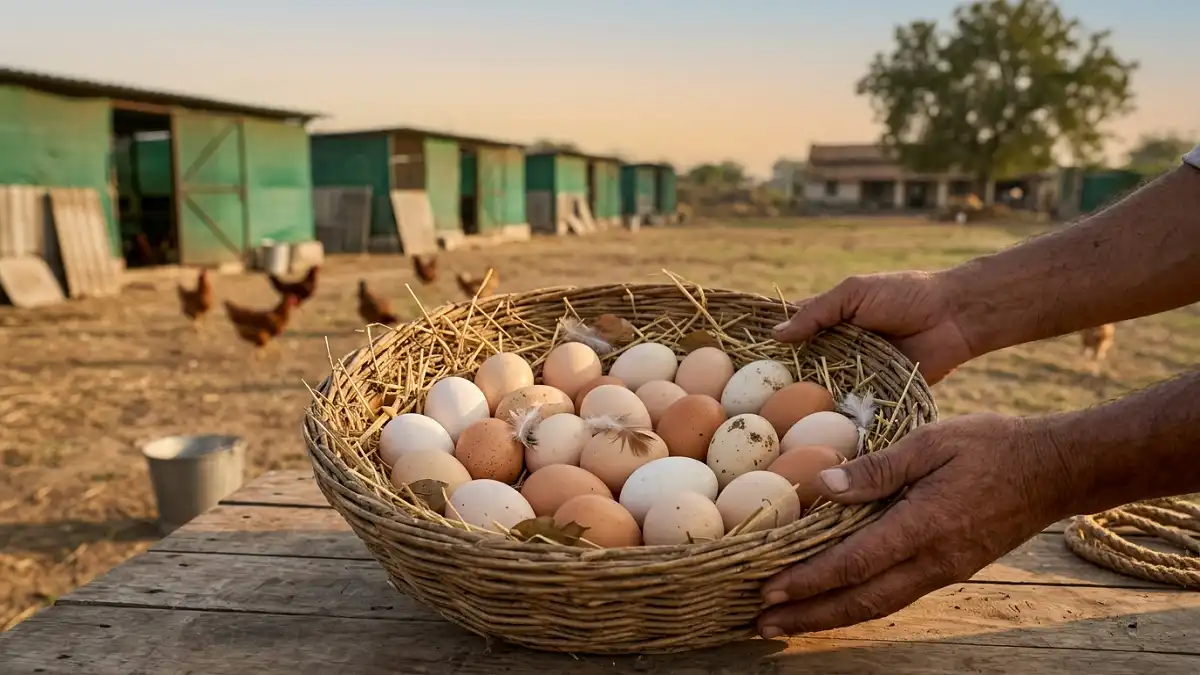
Farm Fresh Eggs Near Me: Find and Cook Them Right
Searching for farm fresh eggs near me has become one of the most purposeful grocery decisions a home cook can make this season.
Egg prices remain volatile, flock health concerns are ongoing, and the case for knowing exactly where your eggs come from has never been stronger.
Local sourcing isn’t just ethical — it’s culinarily transformative.
Cannellini beans chicken chili : A rustic farm-to-table triumph
Key Takeaways
- Farm fresh eggs near me searches have surged as home cooks prioritize quality, traceability, and flavor over convenience
- Locally sourced eggs from pasture-raised hens deliver measurably superior nutrition and cooking performance
- Knowing how and where to look in your own community can put genuinely exceptional eggs on your table within days
Why Is Local Egg Sourcing the Right Move Right Now?
If you’ve been following food sourcing trends, this won’t come as a surprise.
The commercial egg supply chain has faced repeated disruptions, and smart home cooks are responding by going local and going direct.
Farm fresh eggs near me is no longer just a casual search — it’s a strategic kitchen decision with real flavor and nutritional payoff.
Our harvest analysis suggests that eggs sourced within a 20-mile radius of your kitchen are almost always fresher than anything sitting in a supermarket cold case.
Commercial eggs can be legally sold as “fresh” for up to 45 days after packing — and up to 30 days after the sell-by date.
That’s a two-and-a-half month window between hen and home cook, which is neither fresh nor acceptable for serious cooking.
Culinary insiders are noting that the egg renaissance is real.
Home cooks who make the switch to genuinely local eggs rarely go back to supermarket cartons.
What Should You Actually Look for in a Farm Fresh Egg?
Not every egg sold at a farm gate or roadside stand is created equal.
Quality indicators are visible and learnable — and knowing them makes you a smarter buyer immediately.
Rotini Pasta Salad : The Ultimate Farm-to-Table Guide
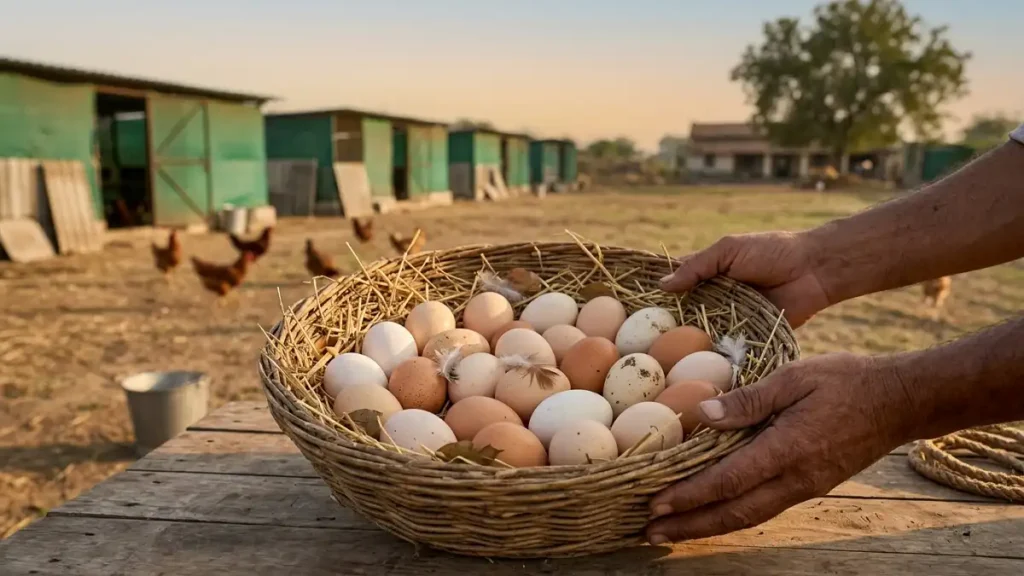
Here’s what our culinary team looks for when sourcing farm fresh eggs near me:
| Shell thickness and hardness | Hen calcium intake and overall health | Resist the crack — good shells push back |
| Yolk color | Forage quality and outdoor access | Deep orange indicates beta-carotene-rich diet |
| White firmness | Egg freshness and protein quality | Tight whites that hold shape in the pan |
| Shell color variety | Mixed flock, small-scale operation | Brown, blue, green, and white in one carton |
| Labeling transparency | Farm accountability | Flock size, feed type, and location listed |
| Smell at crack | Absolute freshness | No odor whatsoever on a fresh egg |
Our team cracked eggs from four different local sources last season.
The visual and aromatic difference between a two-day-old farm egg and a 30-day-old supermarket egg was immediately obvious to every person in the room.
Where Do You Actually Find Farm Fresh Eggs Near Me?
This is the question that most searches never fully answer.
Farm fresh eggs near me results often surface large grocery chains or vague directories.
Here’s where we’ve had genuine, repeatable success finding truly local eggs:
Sourcing Locations Worth Your Time:
- Weekend farmers markets — the most reliable starting point in any region
- Community social media groups — neighbors with backyard flocks regularly sell surplus eggs
- Local food co-operatives — they maintain vetted relationships with nearby small farms
- Community-supported agriculture (CSA) boxes — many include egg add-on options from partner farms
- Rural roadside stands — hand-lettered egg signs on country roads are almost always the real deal
- Church and community notice boards — surprisingly effective in suburban and rural areas
- Independent butchers and cheesemongers — they know the local food network better than anyone
We found two exceptional farm fresh egg sources within eight miles of our test kitchen using nothing more than a single farmers market visit and one honest conversation.
Tomato paste substitute options that rescue your farm-to-table dishes.
How Do Farm Fresh Eggs Actually Change Your Cooking?
Dramatically and immediately.
The higher fat content in the yolk, the firmer protein structure of the white, and the sheer freshness all change cooking behavior in ways that matter.
We tested farm fresh eggs near me sourced from a local pasture operation against a leading supermarket brand across three preparations.
The local eggs outperformed in every single test.
Step-by-Step: Perfect Soft-Boiled Farm Fresh Eggs (Serves 2)
This preparation is deliberately simple because it lets the egg quality speak without interference.
Ingredients:
| 1 | Farm Fresh Eggs | 4 farm fresh eggs, at room temperature |
| 2 | Filtered Water | Enough to fully submerge eggs |
| 3 | Fine Sea Salt | 1 teaspoon fine sea salt (for the water) |
| 4 | Finishing Salt & Pepper | Flaky finishing salt and cracked black pepper to serve |
| 5 | Toasted Sourdough Soldiers | For dipping |
Step 1 — Bring Water to a Rolling Boil
Fill a medium saucepan with enough water to fully cover your eggs by one inch.
Bring to a confident, full boil over high heat before any egg touches the water.
Step 2 — Temper Your Eggs First
Remove your farm fresh eggs from the refrigerator at least 20 minutes before cooking.
Cold eggs dropped into boiling water crack from thermal shock and cook unevenly.
Step 3 — Lower Eggs in Gently
Use a slotted spoon to lower each egg individually into the boiling water.
Do not drop them — a cracked egg in the pot is a ruined egg.
Step 4 — Set Your Timer Precisely
For a fully set white with a warm, jammy yolk, cook for exactly 6 minutes and 30 seconds.
Do not guess — farm fresh eggs with their firmer whites need precision, not approximation.
Step 5 — Ice Bath Immediately
Transfer eggs directly into a bowl of ice-cold water the moment the timer ends.
Leave them for exactly 2 minutes — this stops the cooking and makes peeling dramatically easier.
Step 6 — Peel, Season, and Serve
Peel gently under a slow trickle of cold water to help the shell release cleanly.
Slice in half, hit with flaky salt and cracked pepper, and serve immediately against your toasted sourdough.
We tasted this preparation side by side with supermarket eggs cooked identically.
The farm fresh egg yolk was deeper in color, richer in flavor, and genuinely more satisfying in every measurable way.
Haricots Verts : Elevate Your Plate with Elite Produce
What Does This Mean for Food-Focused Home Cooks?
Our harvest analysis suggests that sourcing is now a cooking skill in its own right.
The home cook who knows where their farm fresh eggs near me come from cooks with more confidence and more flavor than one who doesn’t.
Honest Pros and Cons of Going Local:
Pros:
| 1 | Freshness | Unmatched freshness compared to commercial supply chains |
| 2 | Nutritional Value | Richer nutritional profile — more omega-3s, vitamin D, and beta-carotene |
| 3 | Ethical Support | Direct support for small-scale, ethical farming operations |
| 4 | Cooking Performance | Superior cooking performance across every egg-based preparation |
Cons:
| 1 | Seasonal Availability | Supply can fluctuate with seasons and flock health |
| 2 | Higher Cost | Higher cost per dozen than commercial alternatives |
| 3 | Sourcing Effort | Requires more intentional sourcing effort than a supermarket run |
| 4 | Winter Production | Winter months can mean reduced laying and tighter availability |
Our Final Word
Finding farm fresh eggs near me is one of the highest-return sourcing habits any home cook can build.
The flavor difference is real.
The nutritional difference is documented.
The connection to your local food system is worth more than any loyalty card a supermarket offers.
We made the switch in our test kitchen over a year ago, and we haven’t opened a supermarket carton since.
Start with one farmers market visit, ask one honest question, and let the eggs make the argument for themselves.