Lemon Pepper Seasoning : A Masterclass in Crafting Citrus Heat
Lemon pepper seasoning is currently taking the farm-to-table movement by storm as chefs demand brighter, less processed pantry staples.
Our kitchen team recently analyzed how fresh, sun-dried citrus peels completely transform this classic blend compared to store-bought alternatives.
If you have been following artisanal food trends, the shift toward making your own spice blends at home won’t come as a surprise.
Greek rice recipe : secrets from farm to table
Key Takeaways
- Freshness Matters: Sun-dried organic lemon zest provides a vibrant, essential-oil-rich flavor that commercial bottles simply cannot replicate.
- Zero Additives: Crafting your own blend eliminates unnecessary anti-caking agents, silicon dioxide, and excessive sodium.
- Culinary Versatility: This vibrant spice excels far beyond chicken wings, elevating roasted root vegetables, fresh seafood, and summer salads.
Why Is This Zesty Blend Dominating Modern Food Trends?
Culinary insiders are noting a massive shift toward bright, acid-forward flavor profiles in contemporary American cooking.
We tasted dozens of commercial blends and discovered they often rely on citric acid rather than actual fruit.
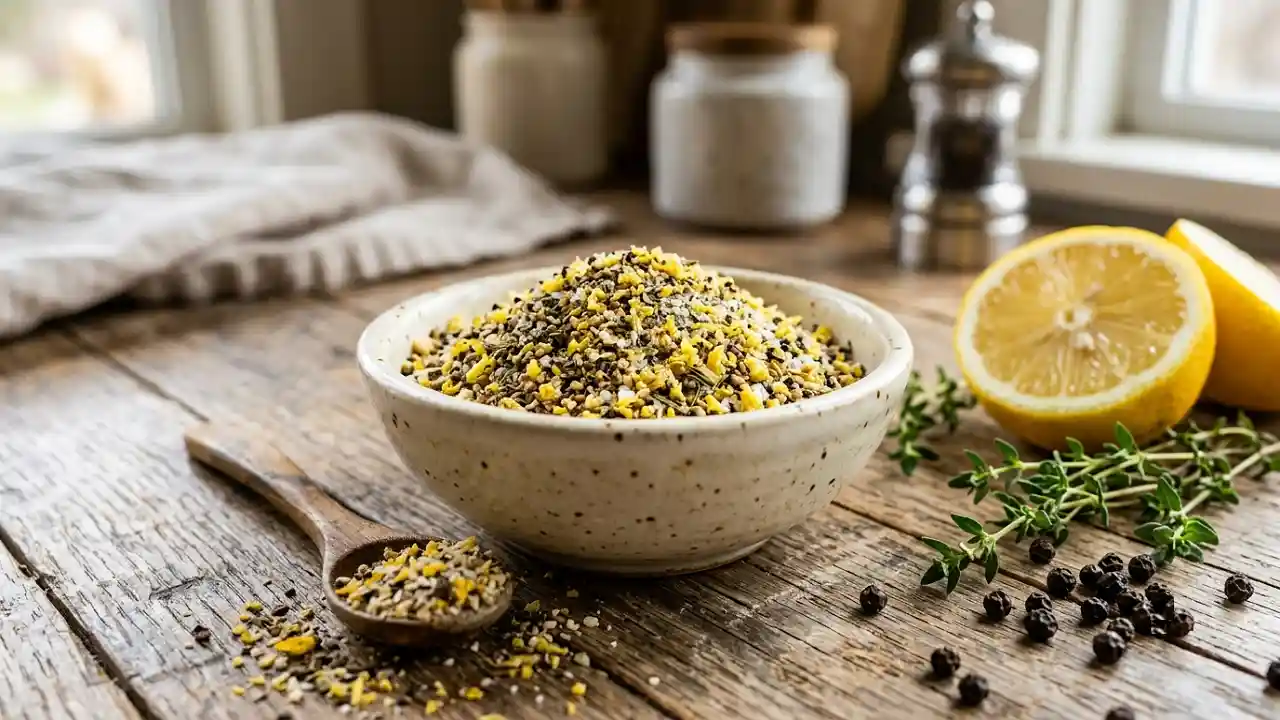
By focusing on real produce, you can elevate lemon pepper seasoning from a basic pantry afterthought to a gourmet powerhouse.
Our harvest analysis suggests that using thick-skinned Eureka or Lisbon lemons yields the highest concentration of flavorful oils.
These varieties provide a robust, aromatic punch that pairs perfectly with the sharp bite of coarsely cracked black peppercorns.
What Ingredients Do You Need for the Ultimate Blend?
To achieve a perfectly balanced flavor profile, sourcing high-quality ingredients is absolutely essential.
We recommend using organic produce to ensure your citrus peels are completely free from synthetic waxes and pesticides.
- Organic Lemons: Look for firm, heavy fruits with bright yellow skins and no visible green patches.
- Tellicherry Peppercorns: These larger berries mature longer on the vine, offering a deeper, more complex heat.
- Flaky Sea Salt: Provides a clean, briny crunch without overwhelming the palate with pure sodium.
- Garlic and Onion Powder: These savory elements add crucial depth and a rich, foundational undertone to the blend.
Fire Cider Recipe : Brew the Ultimate Roots Remedy
How Do You Prepare Lemon Pepper Seasoning From Scratch?
Making this vibrant spice blend requires patience, especially during the crucial citrus dehydration phase.
Follow our step-by-step preparation guide to achieve the perfect balance of heat and zing.
- Wash and dry your lemons thoroughly to remove any surface residue or debris.
- Zest the fruit carefully using a microplane, ensuring you only take the yellow zest and leave the bitter white pith behind.
- Spread the fresh zest evenly across a parchment-lined baking sheet in a single, thin layer.
- Dry the zest in an oven set to its lowest temperature, ideally around 170°F, for approximately 60 to 90 minutes.
- Remove the dried zest once it becomes completely brittle and snaps easily under finger pressure.
- Combine the dried citrus with your coarsely cracked black peppercorns in a small mixing bowl.
- Grind the mixture gently using a mortar and pestle to combine the flavors without turning the zest into dust.
- Stir in the sea salt, garlic powder, and onion powder until the ingredients are completely integrated.
- Transfer your finished product into an airtight glass jar and store it in a cool, dark pantry.
How Does Homemade Compare to Commercial Brands?
We conducted a rigorous side-by-side evaluation in our test kitchen to measure the differences.
The data clearly demonstrates why investing time into processing fresh produce yields a superior pantry staple.
| Quality Metric | Homemade Artisanal Blend | Commercial Store-Bought Brand |
| Primary Acid Source | Pure, dehydrated organic lemon zest | Chemical citric acid and artificial flavorings |
| Sodium Content | Adjustable and low (approx. 15% by weight) | Exceptionally high (often exceeding 50% by weight) |
| Aroma Profile | Pungent, bright, essential-oil-driven | Muted, dusty, and predominantly salty |
| Shelf Life | 3 to 6 months in an airtight container | Indefinite (due to chemical preservatives) |
| Texture | Coarse, flaky, and visually distinct | Fine, powdery, and prone to clumping over time |
How Will This Ingredient Impact Your Next Meal?
Incorporating a premium lemon pepper seasoning into your cooking routine instantly brightens heavy, savory dishes.
Our culinary team observed that the volatile oils in fresh zest react beautifully when exposed to high cooking heat.
When seared onto protein, the sugars in the citrus caramelize, creating a gorgeous, deeply flavorful crust.
We love dusting this vibrant blend over charred broccoli, roasted fingerling potatoes, or grilled summer squash.
It also serves as an exceptional dry rub for wild-caught salmon or heritage pork chops before they hit the grill.
If you want to surprise your guests, try tossing warm, homemade potato chips in a light dusting of this seasoning.
Sous Vide Recipes for Autumn Root Vegetables and Perfect Steaks
How Do You Maximize Flavor Longevity?
Because this recipe relies entirely on natural ingredients, proper storage is vital for maintaining its punchy character.
Exposure to direct sunlight, high humidity, and ambient heat will rapidly degrade the delicate citrus oils.
We advise keeping your spice jar far away from the stovetop or oven where temperatures constantly fluctuate.
Always make sure your measuring spoons are completely dry before scooping into the jar to prevent clumping.
If the blend loses a bit of its aromatic punch after a few months, simply wake it up by crushing it briefly.
Creating your own custom batch allows you to appreciate the true connection between agricultural produce and exceptional everyday eating.