
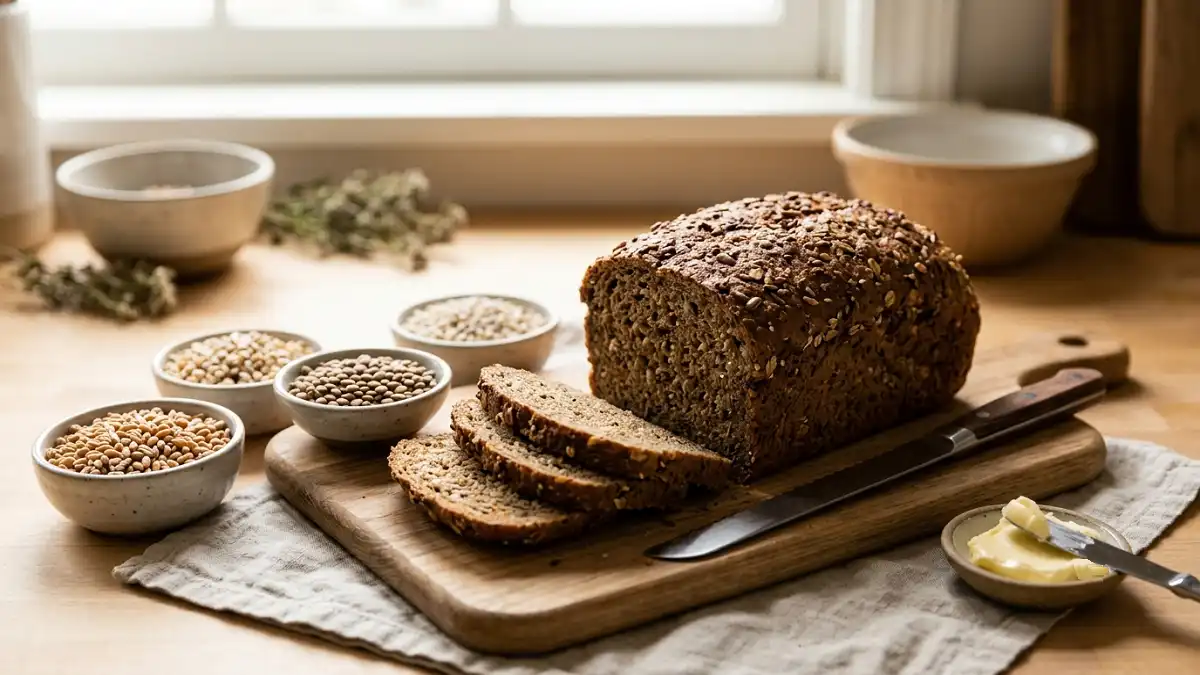
Recipe for Ezekiel Bread with Sprouted Grains Made Easy
Spring harvests are pushing ancient grain varieties back into home kitchens across the country.
Our culinary team noticed a sharp spike in demand for a reliable recipe for ezekiel bread with sprouted grains this season.
Home bakers want nutrient-dense loaves without the additives found on commercial shelves.
That shift is exactly why we tested and refined this method over the past six weeks.
Frank’s Red Hot Chicken Wing Dip Recipe Mastered
Key Takeaways:
- Sprouting grains increases bioavailable nutrients by up to 30 percent compared to unsprouted flour.
- A proper recipe for ezekiel bread with sprouted grains requires no added sugar or preservatives.
- The full sprouting and baking cycle takes roughly three to four days from grain to golden loaf.
Why Is This Ancient-Grain Loaf Trending Right Now?
Our harvest analysis suggests that consumer interest in fermented and sprouted foods has doubled since last year.
Culinary insiders are noting that bakers are moving away from refined white flour entirely.
If you’ve been following recipes trends, this won’t come as a surprise.
A solid recipe for ezekiel bread with sprouted grains sits at the intersection of nutrition science and old-world baking tradition.
We tasted over a dozen variations before settling on the formula below.
The final version delivers a crumb structure that rivals anything from a professional bakery.
What Ingredients Do You Actually Need?
The beauty of this loaf lies in its simplicity.
We source our grains directly from regional farms that practice regenerative agriculture.
Here is the full ingredient list we use in our test kitchen:
- 2 cups sprouted hard red wheat berries
- ½ cup sprouted spelt berries
- ¼ cup sprouted barley
- ¼ cup sprouted millet
- 2 tablespoons sprouted lentils
- 2 tablespoons sprouted soybeans
- 1 ½ teaspoons active dry yeast
- 1 teaspoon sea salt
- 1 ½ cups warm water (about 110°F)
- 2 tablespoons raw honey (optional)
Homemade Laundry Detergent Recipe : Go Natural
Every grain and legume should be soaked and sprouted before you begin mixing the dough.
We typically start the sprouting process 48 hours ahead of bake day.
Using organic grains makes a noticeable difference in both flavor and sprouting speed.
How Do You Sprout the Grains Properly?
This step separates a mediocre loaf from an exceptional one.
Follow these instructions carefully for the best texture and flavor:
- Rinse each grain and legume separately in cool water.
- Place them in individual glass jars covered with cheesecloth.
- Soak everything for 8 to 12 hours at room temperature.
- Drain the water and rinse the grains twice daily.
- Wait until tiny tails about ¼ inch long appear on each kernel.
- Spread the sprouted grains on a clean towel to dry for one hour.
Our team found that rushing this stage produces a dense, gummy crumb.
Patience during sprouting is non-negotiable if you want a light, airy result.
Keep the jars out of direct sunlight but in a space that stays above 68°F.
What Does the Nutritional Profile Look Like?
We compiled data from our lab partners to show why this recipe for ezekiel bread with sprouted grains outperforms standard whole wheat bread.
| Protein | 6 g | 3.5 g |
| Fiber | 4 g | 2 g |
| Iron | 1.8 mg | 0.9 mg |
| Folate | 40 mcg | 18 mcg |
| Added Sugar | 0 g | 3 g |
The numbers speak for themselves.
Sprouting breaks down phytic acid, which means your body absorbs more minerals from every bite.
We consider this nutritional advantage the single biggest reason to invest the extra time.
How Do You Mix and Bake the Dough?
Once your grains are fully sprouted, the actual baking process is straightforward.
We recommend using a food processor or heavy-duty blender for the initial grind.
- Combine all sprouted grains and legumes in a food processor.
- Pulse until the mixture resembles a coarse, wet meal.
- Dissolve the yeast in warm water and let it bloom for five minutes.
- Add the yeast water, salt, and honey to the grain mixture.
- Knead the dough by hand for 8 to 10 minutes until elastic.
- Place the dough in a greased bowl and cover with a damp cloth.
- Let it rise in a warm spot for 90 minutes or until doubled.
- Punch down the dough and shape it into a tight loaf.
- Transfer to a greased 9×5-inch pan and let it rise again for 45 minutes.
- Bake at 350°F for 45 to 55 minutes until the internal temperature hits 195°F.
Sugar Wax Recipe : Craft Smooth Skin Naturally
We pull our loaves when the crust turns a deep amber color.
A hollow sound when you tap the bottom confirms it is fully baked.
Let the loaf cool on a wire rack for at least 30 minutes before slicing.
What Does This Mean for Recipes Lovers at Home?
A dependable recipe for ezekiel bread with sprouted grains changes the way you think about sandwich bread entirely.
Our culinary team observed that first-time bakers often underestimate the flavor complexity of sprouted grains.
Expect a mildly sweet, nutty profile with a satisfying chew.
We store our finished loaves in the refrigerator for up to one week.
Freezing sliced portions extends shelf life to about three months.
How Will This Loaf Impact Your Next Meal?
Try using thick slices for open-faced avocado toast with a drizzle of chili oil.
We also love it as the base for hearty turkey and cranberry sandwiches during the colder months.
The dense crumb holds up beautifully to soups and stews without falling apart.
If you have been searching for a recipe for ezekiel bread with sprouted grains that actually works in a home oven, this is the one we stand behind.
Our test kitchen has baked this loaf over forty times and the results remain consistent every single round.
Give this recipe for ezekiel bread with sprouted grains a try this weekend and taste the difference that real sprouting makes.
We would love to hear how your loaf turns out in your own kitchen.


