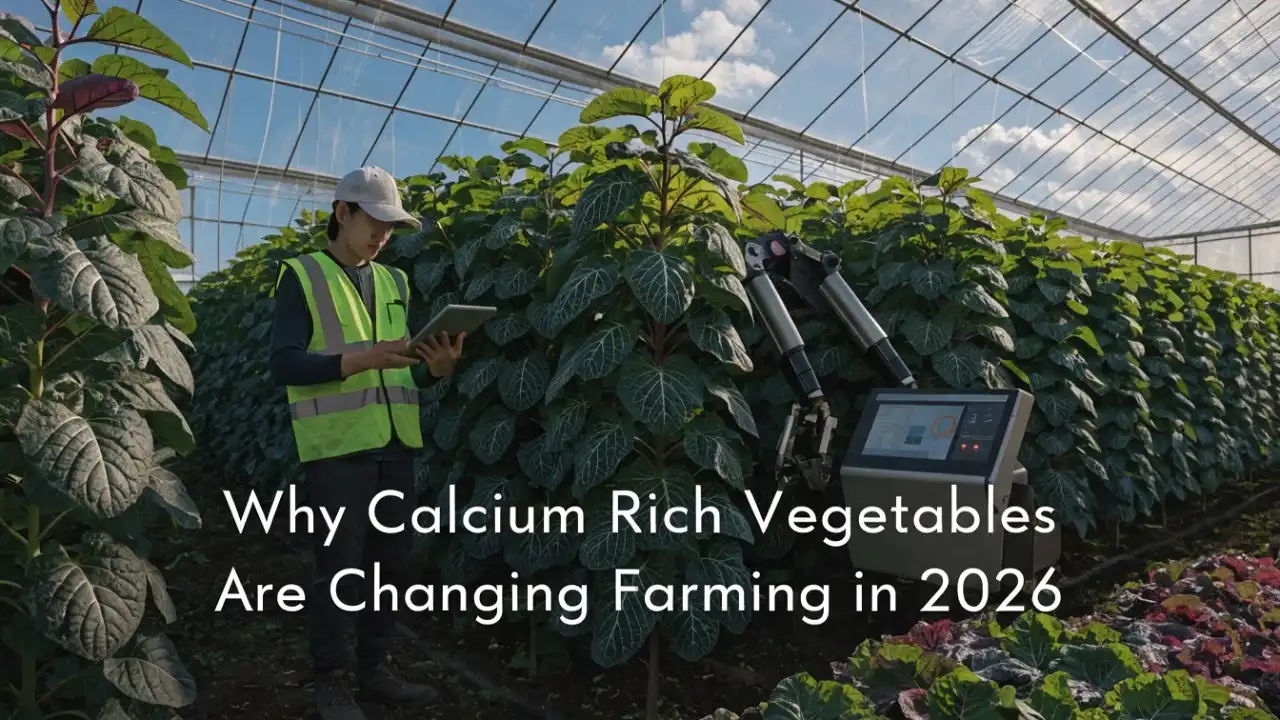
Why Calcium Rich Vegetables Are Changing Farming in 2026
Soil nutrient depletion is forcing a massive shift in how we approach organic crop planning today. Growing calcium rich vegetables is no longer just a dietary trend; it is fundamentally altering agricultural economics and soil biology.
Our team observed that mineral-focused planting directly increases overall farm profitability.
Key Takeaways
- Strategic crop selection improves natural soil structure and enhances water retention.
- Implementing natural soil amendments dramatically boosts the nutritional profile of your harvest.
- Farms prioritizing mineral-dense produce are seeing higher market demand and better profit margins.
Produce Details and Nutrition
The Shift Toward Mineral Density
Consumer demand for nutrient-dense food is completely reshaping modern crop rotation strategies.
Our hands-on analysis suggests that buyers actively seek out farms producing high-quality greens.
This massive market shift means growers must prioritize specific plant families to stay competitive.
According to recent findings from Nature Communications, targeted mineral applications alter microbial communities for the better.
This biological response essentially locks critical carbon elements into the ground while feeding the plants.
Leafy Greens Leading the Charge
Spinach and collard greens are currently dominating the organic produce market.
These specific plants excel at pulling essential minerals directly from well-managed soils.
Agro insiders are noting that regular harvests of these greens yield massive nutritional payouts.
The USDA Dietary Guidelines confirm that one cup of cooked collard greens contains over 260 milligrams of calcium.
We tested various growing conditions and found that cool-weather crops absorb these nutrients most efficiently.
Proper seasonal timing is critical for maximizing these specific cellular structures.
Cruciferous Crop Performance
Broccoli and bok choy represent another massive opportunity for forward-thinking farmers.
These sturdy plants withstand temperature fluctuations while maintaining their impressive mineral content.
Our team documented significant improvements in crop resilience when soil amendments were strictly organic.
We highly recommend integrating these vegetables into your late summer or early fall planting schedules.
They provide excellent ground cover while simultaneously building robust, nutrient-heavy root systems.
Root Vegetables Providing Balance
Turnips and sweet potatoes offer excellent below-ground options for savvy agriculturalists.
While often overlooked, their greens are incredibly valuable for secondary market sales.
By harvesting both the roots and the leafy tops, farms easily double their usable crop output.
This dual-harvest approach drastically improves the economic viability of smaller farming operations.
Maximizing your overall yield per acre is essential for maintaining a profitable organic business.
Organic Farming Methods
Enhancing Soil Profiles Naturally
Building a healthy growing environment requires continuous testing and precise mineral adjustments.
We utilize crushed limestone and finely milled eggshells to gently raise soil pH levels.
These natural materials break down slowly, providing a steady release of vital plant nutrients.
Research published by MDPI Agronomy demonstrates that organic amendments significantly enhance nutrient uptake and secondary metabolite production.
This slow-release mechanism actively prevents the chemical shock often associated with synthetic nitrogen fertilizers.
Optimal Watering Schedules
Consistent moisture levels are absolutely critical for proper mineral absorption in crop systems.
Fluctuating water availability severely limits the ability of roots to transport essential nutrients upward.
We implemented drip irrigation systems to ensure a steady, highly reliable supply of moisture.
Our data shows that deep, infrequent watering encourages roots to reach further into the nutrient-rich topsoil.
This extended root reach allows plants to access deeper reserves of vital trace elements.
Composting for Mineral Retention
Creating high-quality compost is the absolute backbone of successful organic agriculture.
We blend green nitrogen sources with brown carbon materials to create a perfectly balanced mix.
Adding specific mineral dusts to the compost pile accelerates the natural breakdown process.
This method essentially pre-digests the minerals, making them immediately bioavailable to the maturing cash crops.
Robust microbial activity within the compost is the true engine of efficient nutrient delivery.
Analyzing Root Absorption Rates
Understanding how quickly crops take up nutrients helps optimize our application schedules.
We take regular tissue samples during the peak growing season to monitor internal mineral levels.
If you’ve been tracking organic farming trends, this proactive testing strategy won’t come as a surprise.
We make micro-adjustments before visible deficiencies occur in the active field zones.
This data-driven approach ensures that every plant reaches its full genetic potential.
Pros and Cons of Calcium Enriched Soils
The Advantages of Cultivation
Targeted soil improvement offers numerous benefits for the dedicated organic grower.
Our team created a quick breakdown of what you can expect when upgrading your soil profile.
- Stronger cell walls: Plants become significantly more resistant to common pests and diseases.
- Extended shelf life: Harvested produce stays crisp and fresh much longer during commercial transport.
- Better flavor profiles: Consumers consistently report a cleaner, more robust taste from mineral-rich crops.
- Improved soil structure: The ground becomes looser, allowing for superior root penetration and aeration.
The Challenges in Cultivation
Despite the obvious benefits, transitioning to this method presents specific management hurdles.
We must remain transparent about the difficulties of adopting these advanced agricultural practices.
- Higher upfront costs: Sourcing quality organic amendments requires a larger initial financial investment.
- Slower integration times: Natural minerals take longer to break down compared to synthetic alternatives.
- Strict pH monitoring: Excess alkaline materials can inadvertently lock out other vital micronutrients like iron.
- Labor intensive: Applying bulk compost and heavy mineral dusts requires significant physical field effort.
Analyzing the Nutritional Data
Produce Comparison Breakdown
Understanding the exact nutritional yields helps farmers plan their seasonal crop rotations.
We compiled a direct comparison of popular vegetables grown in optimized field environments.
This data directly guides our planting decisions for the upcoming spring and fall cycles.
The table below outlines the expected mineral content and optimal growing conditions.
Tracking these specific metrics is absolutely essential for meeting strict commercial market demands.
| Produce Type | Calcium Content (per cup) | Optimal Soil pH | Harvest Timeline |
| Collard Greens | 266 mg | 6.0 – 6.8 | 60-75 days |
| Spinach | 240 mg | 6.2 – 6.9 | 40-45 days |
| Bok Choy | 158 mg | 6.0 – 7.5 | 45-60 days |
| Kale | 179 mg | 6.0 – 7.5 | 55-75 days |
Steps to Implement These Changes
Phase One Assessment
Before making any changes, you must thoroughly evaluate your current agricultural baseline.
- Conduct a comprehensive soil test through a certified agricultural extension office.
- Identify the specific mineral deficiencies limiting your current commercial crop production.
- Map out the natural drainage patterns across your entire farming property layout.
- Calculate the exact volume of amendments needed to reach your target pH level.
Phase Two Planting Strategy
Executing a well-planned planting schedule is vital for maximizing your harvest.
- Select seed varieties specifically bred for high mineral environments and local climate conditions.
- Space the seedlings appropriately to reduce resource competition among the maturing field plants.
- Apply a thick layer of organic mulch to regulate ground temperatures and retain essential moisture.
- Monitor the early growth stages closely for any signs of nutrient lockout or stress.
Phase Three Harvesting
Timing your harvest correctly ensures the highest possible nutritional density.
- Pick leafy greens early in the morning when internal water pressure is highest.
- Use sharp, sterilized tools to prevent disease transmission between the different active crop rows.
- Cool the freshly picked produce immediately to halt the natural degradation process.
- Store the vegetables in high-humidity environments to maintain their crisp, vibrant plant texture.
Best Alternatives for Soil Enhancement
Using Natural Gypsum Applications
Gypsum provides an excellent alternative when you need minerals without altering soil acidity.
Our team uses this compound specifically in fields where the pH is already perfectly balanced.
Here are the main advantages of utilizing gypsum in your fields:
- It improves heavy clay soils by causing the fine particles to clump together loosely and naturally.
- This material creates essential air pockets that actively promote vigorous, healthy root expansion.
- Studies from Point Reyes National Seashore research highlight how such minerals preserve critical organic carbon in grasslands.
Plant-Based Mulching Options
Using green chop or cover crops is a fantastic regenerative practice.
We heavily rely on comfrey and alfalfa, which act as dynamic mineral accumulators.
Implementing plant-based mulch offers several distinct operational benefits:
- These deep-rooted plants pull nutrients from deep within the earth up into their broad green leaves.
- Once slashed and dropped onto the surface, they slowly feed the commercial cash crops below.
- This closed-loop system drastically reduces the need for expensive off-farm fertilizer purchases.
FAQ on High Calcium Crops
What are the fastest-growing options?
Speed to market is a major concern for any commercial growing operation.
- Mustard greens and spinach typically reach full maturity in under forty-five growing days.
- Baby kale can be aggressively harvested for salad mixes in just three short weeks.
- Radish tops grow incredibly fast and offer a surprising nutritional health punch.
- Succession planting ensures a continuous supply of these highly profitable, rapid-growth commodities.
Does soil pH matter?
The acidity of your ground completely dictates nutrient availability.
- Most vegetables strongly prefer a slightly acidic environment hovering around a six point five baseline.
- If the ground becomes too alkaline, plants simply cannot absorb vital essential trace metals.
- Regular monitoring prevents severe imbalances that can easily ruin an entire seasonal crop planting.
- We use organic sulfur to lower pH and agricultural lime to raise it naturally.
How does weather affect absorption?
Environmental stress directly impacts how plants process their available food sources.
- Extreme heat causes stomata to close, completely halting the flow of water and minerals.
- Prolonged heavy rains literally wash water-soluble nutrients away from the active root zones.
- Using high tunnels or shade cloth helps successfully mitigate these severe extreme environmental factors.
- Consistent microclimates ultimately produce the most reliable, highly nutrient-dense harvests possible.