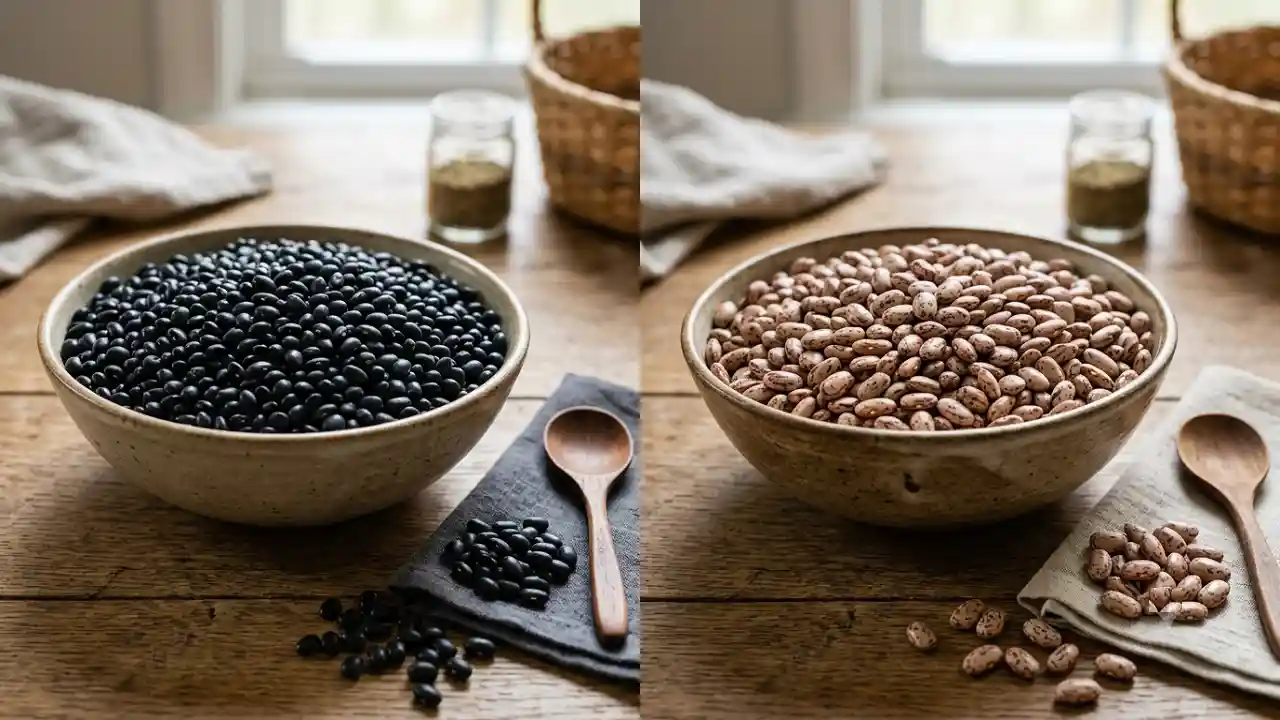
Black beans vs pinto beans : Which rules your kitchen?
As autumn harvests fill our farm-to-table kitchens, choosing between black beans vs pinto beans determines the texture and depth of your seasonal stews.
Our culinary team observed a massive shift in how local chefs are utilizing these two powerhouse legumes this season.
Ethnic Food Near Me : Cook It Better at Home
Key Takeaways
- Texture matters: Black beans hold their firm shape under high heat, while pinto beans break down into a creamy, rich consistency.
- Soil and climate: Pinto beans thrive in slightly drier conditions, whereas black beans tolerate humid, warm climates much better.
- Nutritional edge: Both offer incredible fiber and protein, but black beans carry slightly more antioxidants due to their dark skins.
How will this ingredient impact your next meal?
If you have been following modern heirloom produce trends, this comparison won’t come as a surprise.
We harvested both varieties on our farm this year to test how they perform under different cooking methods.
Our harvest analysis suggests that the debate of black beans vs pinto beans is not just about color, but about culinary structure.
Black beans offer an earthy, mild flavor that pairs beautifully with bright, acidic citrus ingredients.
On the other hand, pinto beans carry a distinctively nutty, almost meaty undertone that anchors heavier dishes.
Choosing the right legume depends entirely on whether you want your beans to stand out or blend into the background.
If you are roasting veggies for a harvest bowl, the firm texture of the dark bean provides a satisfying chew.
For comforting, slow-cooked soups, the starchiness of the speckled bean naturally thickens your broth without adding flour.
Food Challenges Near Me : Redefine the Game
To make things easier, we created a direct comparison based on our farm kitchen trials.
| Feature | Black Beans | Pinto Beans |
| Flavor Profile | Earthy, mild, slightly sweet | Rich, creamy, nutty, earthy |
| Best Cooking Method | Simmering, steaming, pressure cooking | Slow cooking, mashing, stewing |
| Texture When Cooked | Firm, dense, maintains outer skin | Soft, creamy, easily mashed |
| Growing Days to Harvest | 85 to 100 days | 90 to 150 days |
| Ideal Soil Temp | 60°F to 80°F | 70°F to 80°F |
What does this mean for produce lovers and home cooks?
Many home cooks treat these legumes as interchangeable, but doing so ignores their unique culinary physics.
Our kitchen tests proved that using the wrong bean can completely alter the structural integrity of your plate.
For example, a classic pot of re-fried beans demands the soft, starch-releasing qualities of pinto beans.
If you attempt this with black beans, you get a grit-heavy paste rather than a smooth, velvety spread.
Conversely, if you throw pinto beans into a cold summer salad, they quickly turn mushy and absorb too much dressing.
This is why understanding the nuances of black beans vs pinto beans elevates simple home cooking to restaurant quality.
Our culinary testers also noticed that cooking times vary slightly between the two.
Pinto beans contain more natural starch, which requires a slightly longer cooking time to reach peak creaminess.
Black beans have a tougher outer skin, meaning they require a consistent simmer to soften without exploding.
Chinese Food Menu : Rethink It With Fresh Roots
How do these crops perform in the soil?
From an agricultural perspective, growing black beans vs pinto beans presents distinct field management choices.
Our farm team noted that pinto bean vines require more physical space and sturdy trellising to prevent ground rot.
Black beans often grow in compact bush varieties that make them highly suitable for smaller raised beds.
They also act as excellent nitrogen fixers, enriching your garden soil for the next planting cycle.
If you live in a region with unpredictable late-summer rains, black beans tend to resist mold better than their pinto counterparts.
Knowing these agricultural differences helps us plan our crop rotations more effectively each spring.
We also found that pests like bean beetles show a slight preference for the tender leaves of the pinto plant.
Therefore, companion planting with marigolds is highly recommended if you choose to grow pintos.
Water management is another crucial factor to consider when planning your backyard garden.
Pinto plants are surprisingly drought-tolerant once their root systems establish themselves in the soil.
Black bean plants require consistent moisture throughout their flowering stage to produce plump, uniform pods.
How should you prepare these legumes from scratch?
Whether you choose black beans vs pinto beans, skipping the canned aisle and cooking dry beans yields far superior flavor.
Here is our step-by-step kitchen guide to preparing the perfect pot of heirloom beans.
Step 1: The Sorting and Rinsing Stage
Spread your dry beans across a flat, clean baking sheet.
Carefully inspect the pile to remove any small pebbles, cracked beans, or farm debris.
Transfer the sorted beans into a large colander and rinse them thoroughly under cold running water.
2026 Agri-Food Report Food Beverage Sector : What It Means for Produce
Step 2: The Hydration Method (The Soak)
Place the washed beans into a heavy stockpot.
Pour in enough cool water to cover the beans by at least three inches.
Add one tablespoon of kosher salt to the water, which helps soften the outer skins.
Let them sit at room temperature for at least eight hours, or ideally overnight.
Step 3: The Gentle Simmer
Drain the soaking water and rinse the beans one final time.
Return them to the pot and cover with fresh water, leaving two inches of liquid above the bean line.
Toss in your aromatics, such as a halved onion, a few crushed garlic cloves, and a fresh bay leaf.
Bring the pot to a boil, then immediately reduce the heat to a low, lazy simmer.
Keep the pot partially covered with a lid to allow steam to escape.
Step 4: The Finishing Touch
Cook black beans for about 60 to 90 minutes, checking for a tender but firm bite.
Cook pinto beans for 90 to 120 minutes, allowing them to release their natural starches and thicken the cooking broth.
Stir in your salt and acidic ingredients, like lime juice or vinegar, only during the last fifteen minutes of cooking.
Which bean fits your weekly meal plan?
Culinary insiders are noting a resurgence in traditional, slow-cooked comfort foods.
If you are planning a smoky, slow-cooked chili, we highly recommend utilizing pinto beans.
Their creamy interior absorbs the smoky fat of bacon or pork shoulder beautifully.
However, if your menu features vibrant citrus-marinated salads, quick tacos, or black bean soup, stick with the darker legume.
Understanding black beans vs pinto beans allows you to manipulate both texture and visual appeal on the plate.
We believe that keeping both in your pantry is the ultimate kitchen hack for seasonal meal prep.
From a budgetary standpoint, buying these legumes dry is incredibly cost-effective for growing families.
They store perfectly in airtight glass jars for up to a year without losing their nutritional value.
Ultimately, the battle of black beans vs pinto beans has no single winner.
Your choice simply depends on the specific culinary masterpiece you hope to create.