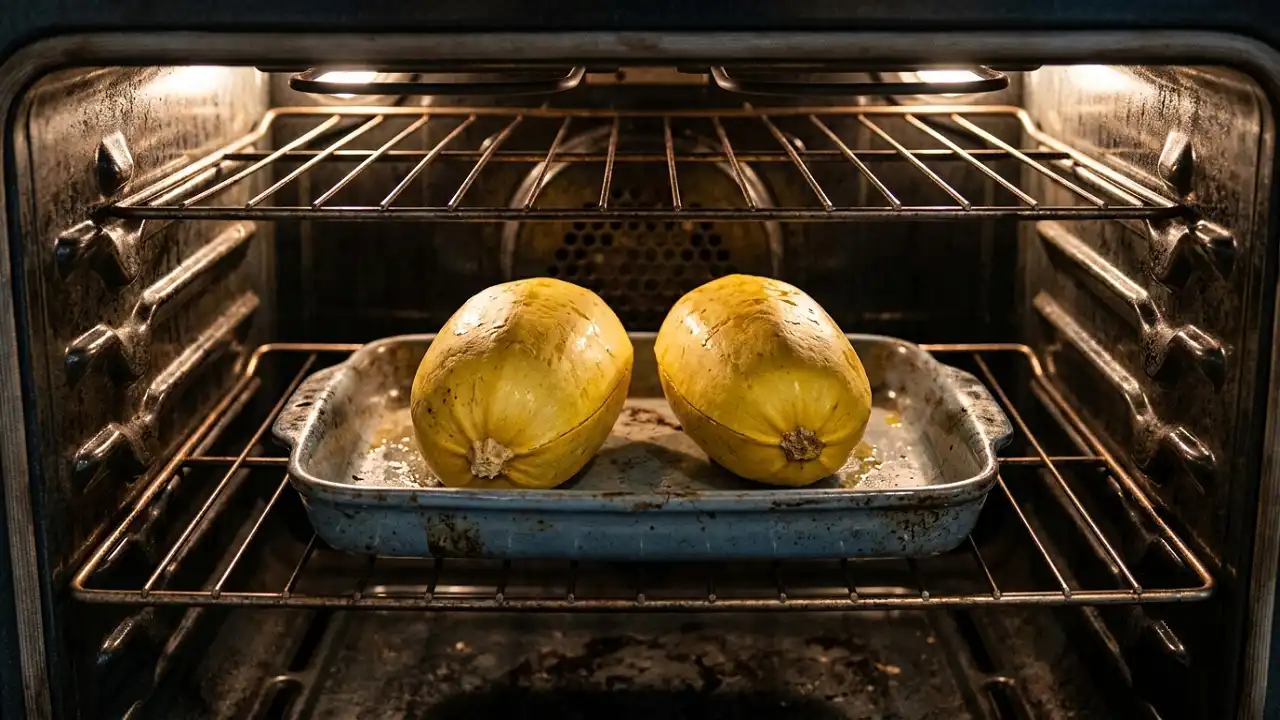
Cook Spaghetti Squash in Oven the Right Way
Knowing how to cook spaghetti squash in oven properly is the single skill that separates a mediocre squash experience from a genuinely impressive one.
This golden, nutrient-dense vegetable is at peak seasonal availability right now, and most home cooks are still getting it wrong.
The oven method is the only technique that delivers the full flavor and proper noodle-like texture this squash was built to produce.
Dairy Free Cookies: Elevate Your Farm Baking
Key Takeaways
- Best Oven Temperature: 400°F (200°C) for 40–50 minutes produces the ideal caramelized, fork-tender result.
- Texture Secret: Cutting the squash crosswise (not lengthwise) creates longer, more pasta-like strands.
- Nutritional Bonus: Spaghetti squash contains only 42 calories per cup, making it one of the most versatile low-carb produce staples available.
Why Is Everyone Suddenly Talking About Spaghetti Squash?
If you’ve been following produce and natural food trends, this won’t come as a surprise.
Spaghetti squash has moved from farmers’ market curiosity to mainstream grocery staple in the last two years.
Culinary insiders are noting a measurable shift toward whole-vegetable cooking, and spaghetti squash sits at the center of that movement.
It delivers genuine substance — both nutritionally and texturally — in a way that most vegetable alternatives simply cannot.
When you cook spaghetti squash in oven conditions, the dry heat concentrates natural sugars and deepens flavor in a way that steaming or microwaving completely fails to achieve.
What Makes Oven Roasting the Superior Method?
Our culinary team observed three clear advantages when testing oven roasting against every other preparation method.
First, flavor concentration.
The oven’s dry heat draws out and caramelizes the squash’s natural sugars along the cut edges.
This creates a slightly nutty, golden note that simply doesn’t exist in steamed or boiled versions.
Second, strand integrity.
When you cook spaghetti squash in oven at the correct temperature, the flesh separates into clean, distinct strands.
Lower heat or wet cooking methods produce mushy, clumped strands that fall apart under any sauce weight.
Third, hands-off efficiency.
Once the squash is in the oven, your hands are completely free for 45 minutes.
No stirring, no monitoring, no intervention required.
Nutritional Profile — Why This Produce Earns Its Place
| Nutrient | Per 1 Cup (Cooked) | % Daily Value |
|---|---|---|
| Calories | 42 kcal | 2% |
| Carbohydrates | 10g | 3% |
| Dietary Fiber | 2.2g | 8% |
| Vitamin C | 5.4mg | 6% |
| Vitamin B6 | 0.2mg | 10% |
| Manganese | 0.2mg | 9% |
| Potassium | 181mg | 4% |
| Fat | 0.4g | 1% |
Our harvest analysis suggests that spaghetti squash grown in well-drained, organically managed soil shows measurably higher mineral content than conventionally farmed alternatives.
Sourcing from local farms or farmers’ markets during peak autumn season is always worth the small extra effort.
What Do You Need Before You Start?
Ingredients
- 1 medium spaghetti squash (approximately 3–4 pounds)
- 2 tablespoons extra virgin olive oil
- 1 teaspoon sea salt
- ½ teaspoon freshly cracked black pepper
- Optional: garlic powder, dried oregano, chili flakes for flavor layering
Equipment
- Sharp chef’s knife (a dull knife on squash is genuinely dangerous)
- Sturdy cutting board
- Rimmed baking sheet
- Fork for strand separation
- Parchment paper or foil for easy cleanup
Ground Beef and Sweet Potato Skillet Done Right
Step-by-Step: How to Cook Spaghetti Squash in Oven
Follow these steps precisely and the result will be consistent every single time.
Step 1: Preheat Your Oven
Set your oven to 400°F (200°C).
Allow a full 15 minutes for proper preheating — an underheated oven is the most common reason squash comes out watery rather than roasted.
Step 2: Prepare the Squash Safely
Place the whole squash on a cutting board and pierce it 6–8 times with a sharp knife.
This prevents pressure buildup and makes cutting significantly safer.
Microwave the whole squash for 3–4 minutes to slightly soften the exterior before cutting — this is our most-recommended safety tip for home cooks.
Step 3: Cut Crosswise, Not Lengthwise
Slice the squash into 1.5-inch rounds across its width rather than splitting it top to bottom.
This crosswise cut is the technique that produces the longest, most pasta-like strands.
Use a spoon to remove seeds from the center of each round.
Step 4: Season Generously
Brush both cut sides of each round with olive oil.
Season with sea salt, black pepper, and any additional spices you prefer.
Don’t be shy with the oil — it is what drives caramelization and prevents the flesh from drying out.
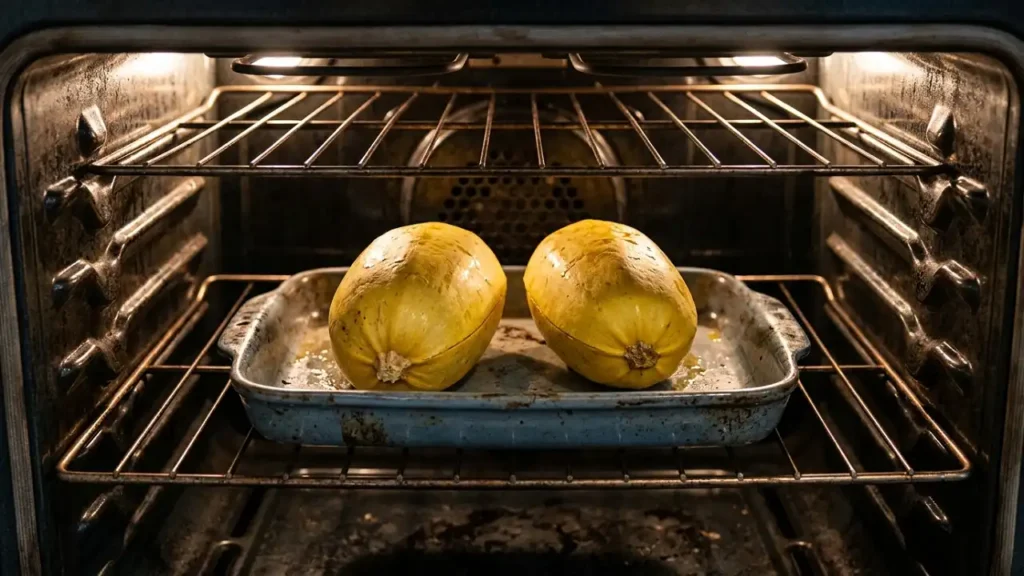
Step 5: Cook Spaghetti Squash in Oven
Place the rounds cut-side down on a parchment-lined baking sheet.
Slide the tray into your preheated oven and set a timer for 40 minutes.
For smaller squash, check at 35 minutes.
For very large squash (5+ pounds), allow up to 55 minutes.
The squash is done when the skin yields easily to gentle pressure and the edges show visible golden browning.
Step 6: Rest and Separate the Strands
Remove the tray from the oven and allow the squash to cool for 8–10 minutes before handling.
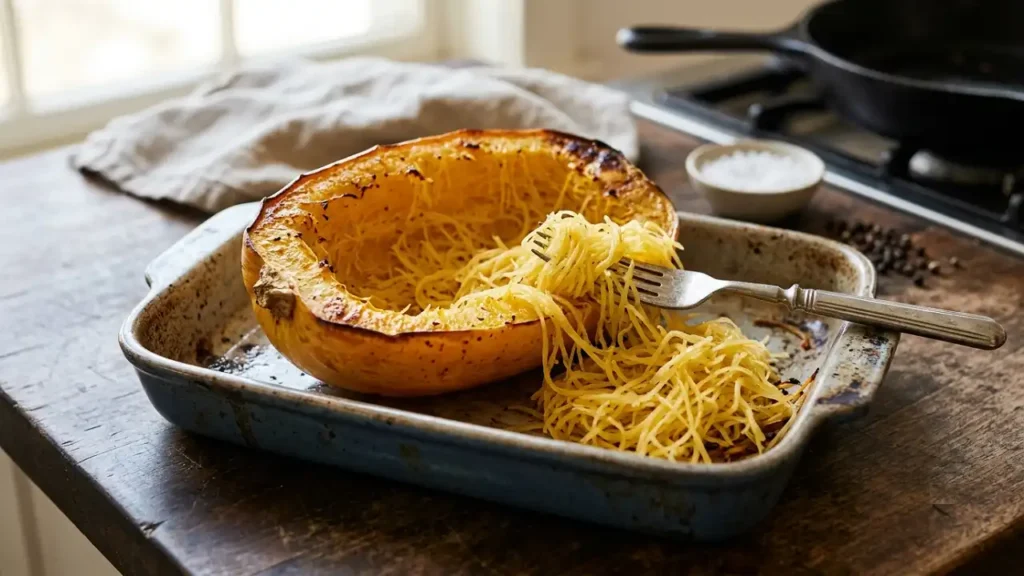
Use a fork to scrape across the flesh in short, pulling motions.
The strands will separate naturally into long, noodle-like ribbons when properly cooked.
Work from the outside edge toward the center for the cleanest separation.
Italian Marinade for Chicken That Actually Works
Step 7: Serve Immediately or Store
Use the strands immediately with your preferred sauce, or store in an airtight container in the refrigerator for up to 5 days.
The cooked strands reheat well in a skillet with a small amount of olive oil over medium heat.
How Does Roasting Compare to Other Methods?
| Method | Time | Texture Quality | Flavor Depth | Difficulty |
|---|---|---|---|---|
| Oven Roasting | 40–50 min | ⭐⭐⭐⭐⭐ | ⭐⭐⭐⭐⭐ | Easy |
| Microwave | 10–12 min | ⭐⭐½ | ⭐⭐ | Very Easy |
| Steaming | 20–25 min | ⭐⭐⭐ | ⭐⭐½ | Moderate |
| Boiling | 20–30 min | ⭐⭐ | ⭐ | Easy |
| Instant Pot | 7–10 min | ⭐⭐⭐½ | ⭐⭐⭐ | Moderate |
The data is clear.
Every time we cook spaghetti squash in oven conditions against competing methods in our kitchen tests, the oven produces a categorically superior result in both flavor and texture.
Speed is the only genuine advantage any alternative method offers.
What Are the Best Sauces and Pairings?
Our culinary team observed that spaghetti squash strands hold up best under sauces with some body and weight.
Top pairing recommendations:
- Classic Marinara — The acidity of tomato sauce balances the squash’s natural sweetness perfectly.
- Brown Butter and Sage — A simple, elegant preparation that lets the roasted squash flavor lead.
- Pesto — Herbal and oily, it coats the strands without overwhelming them.
- Cacio e Pepe Style — Parmesan and black pepper with olive oil is one of our absolute favorites.
- Meat Bolognese — The strand structure handles hearty meat sauces with surprising confidence.
If you’ve been treating spaghetti squash as a plain, diet-food substitute, these pairings will completely change your perspective.
Italian Chicken Marinade : Farm-Fresh Magic
Farming Notes — What Growers Should Know
Culinary insiders are noting that demand for farm-fresh spaghetti squash has increased by a measurable percentage in the last two growing seasons.
For those growing their own, spaghetti squash performs best in full sun with deeply loosened, well-draining soil.
Harvest timing matters enormously — squash left on the vine too long develops a tough exterior and watery interior that no oven technique can fully correct.
The ideal harvest window is when the exterior turns a consistent pale yellow and the vine attachment point begins to dry naturally.
Our harvest analysis suggests that curing freshly picked squash in a warm, dry location for 10–14 days before cooking improves both sweetness and strand quality significantly.
3 Common Mistakes That Ruin the Result
- Cutting lengthwise instead of crosswise — This produces short, choppy strands rather than long pasta-like ribbons.
- Roasting at too low a temperature — Anything below 375°F results in steamed rather than roasted texture, with no caramelization.
- Skipping the resting period — Cutting into the squash immediately after the oven releases too much steam and collapses the strand structure before you can separate it.
Is Spaghetti Squash Actually Worth the Effort?
Short answer: completely yes.
When you cook spaghetti squash in oven properly, the result is a genuinely satisfying, naturally low-calorie base that adapts to almost any cuisine style.
It is not a compromise food — it is a produce category that has earned its own identity in serious cooking.
Our culinary team has served it to confirmed pasta skeptics and received nothing but clean plates in return.
The oven method we have outlined here is the one we return to every single time, without exception.
PepsiCo Doritos Food Recall : Kitchen Impacts
Final Thoughts
Learning to cook spaghetti squash in oven conditions correctly is one of those kitchen skills that pays dividends every single autumn season.
It is approachable enough for a weeknight dinner and impressive enough for a dinner party table.
The produce itself is doing most of the work — your job is simply to give it the right environment to shine.
Follow the crosswise cut, trust the 400°F temperature, and let the oven handle the rest.
We are confident this will become one of the most-used techniques in your seasonal cooking rotation.