Italian Marinade for Chicken That Actually Works
Every summer, when fresh herbs hit peak season, our culinary team revisits one recipe that never disappoints.
An italian marinade for chicken is not just a weeknight shortcut — it is a bridge between the farm and your dinner table.
Right now, with basil and oregano growing wild in kitchen gardens across the country, this is the moment to make it count.
Lunch Ideas for Toddlers : Farm-Fresh Meals Kids Love
Key Takeaways
- A proper italian marinade for chicken relies on acid, fat, and fresh aromatics in the right ratio
- Marinating time matters — less than 30 minutes is too short, and more than 24 hours breaks down texture
- Fresh herbs from your garden or local farm market deliver measurably better flavor than dried alternatives
Why Is Everyone Talking About Herb Marinades Right Now?
If you’ve been following recipes trends this season, this won’t come as a surprise.
Home cooks are moving away from bottled sauces and reaching for whole ingredients instead.
Culinary insiders are noting a sharp rise in searches for scratch-made marinades that use pantry staples.
Our culinary team observed this shift at local farmers’ markets — fresh garlic and flat-leaf parsley are selling faster than ever before.
The timing makes sense.
Consumers are asking harder questions about what goes into their food.
A homemade italian marinade for chicken answers those questions cleanly and deliciously.
dairy free snacks : Transform Fresh Harvests Into Quick Bites
What Makes an Italian Marinade Different From the Rest?
Not all marinades work the same way.
The Italian approach is built on balance — sharp acid cuts through richness, olive oil carries fat-soluble flavors deep into the meat, and herbs do the heavy lifting on aroma.
This is not about dumping a bottle of Italian dressing over chicken breasts.
It is about intentional layering of fresh, quality ingredients.
Our harvest analysis suggests that the difference between a flat marinade and a genuinely great one comes down to three things: quality of olive oil, freshness of herbs, and the right acid-to-fat ratio.
The Core Ingredients You Need
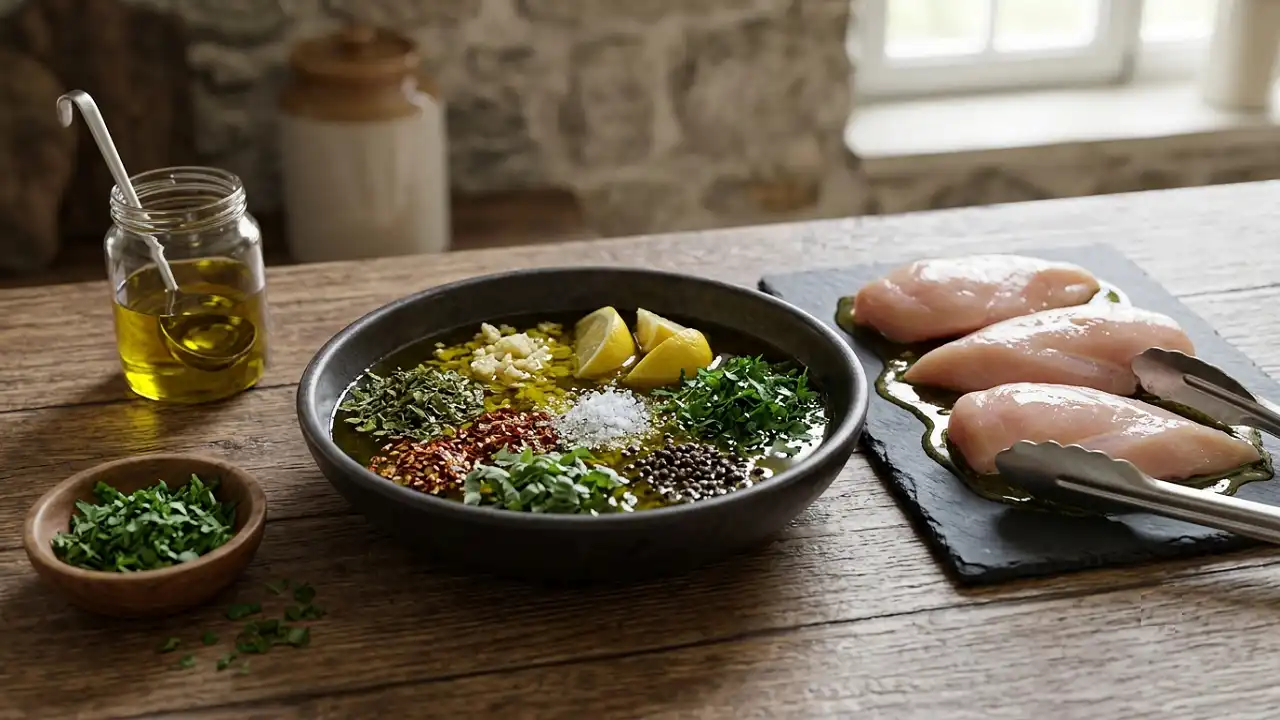
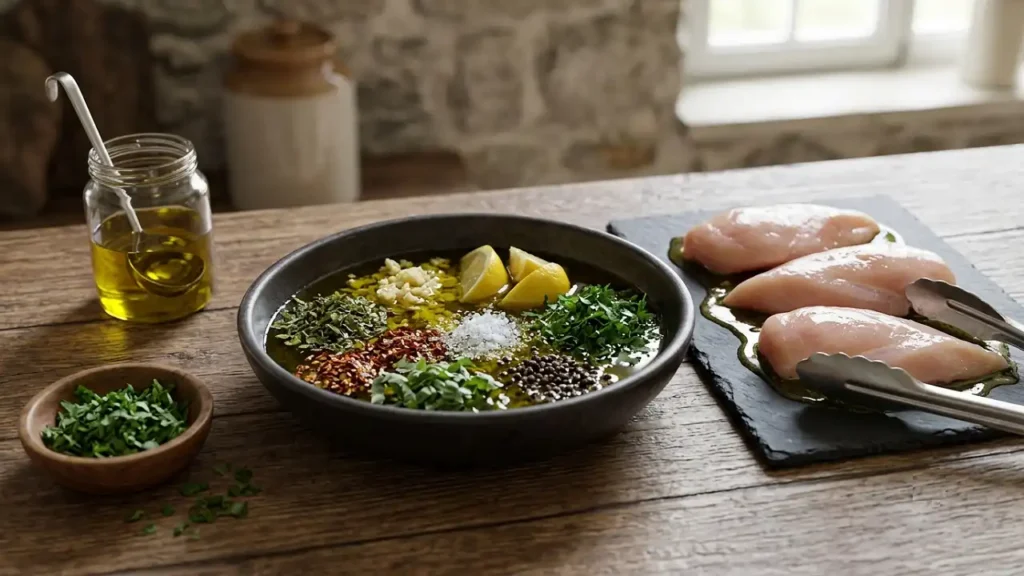
Here is what our culinary team uses in every batch:
- Extra virgin olive oil — at least 3 tablespoons; the base of everything
- Fresh lemon juice — 2 tablespoons; brighter than red wine vinegar for summer recipes
- Red wine vinegar — 1 tablespoon; adds depth the lemon alone cannot
- Fresh garlic — 4 cloves, minced fine
- Fresh oregano — 1 tablespoon, roughly chopped
- Fresh flat-leaf parsley — 2 tablespoons, chopped
- Fresh basil — 1 tablespoon; do not skip this
- Kosher salt — 1 teaspoon
- Black pepper — ½ teaspoon, cracked fresh
- Chili flakes — a pinch; optional but recommended
Spinach and artichoke dip in slow cooker secrets from the farm
Marinade vs. Store-Bought: A Quick Comparison
| Feature | Homemade Italian Marinade | Bottled Italian Dressing |
|---|---|---|
| Sodium Control | Full control | Often very high |
| Fresh Herb Flavor | Strong and vibrant | Flat and faded |
| Ingredient Transparency | 100% known | Often contains additives |
| Cost Per Serving | Lower with garden herbs | Moderate |
| Customization | Fully adjustable | Fixed formula |
How Do You Build This Marinade Step by Step?
Here is our tested, repeatable method for a perfect italian marinade for chicken:
Step 1 — Mince your garlic.
Use a sharp knife or microplane and get it as fine as possible.
Chunky garlic does not penetrate the meat evenly.
Step 2 — Chop all fresh herbs.
Parsley, oregano, and basil should be freshly cut, not pre-chopped from a package.
Stack the leaves, roll them, and slice thin.
Step 3 — Combine wet ingredients.
In a bowl, whisk together olive oil, lemon juice, and red wine vinegar until slightly emulsified.
Step 4 — Add all aromatics.
Stir in garlic, herbs, salt, pepper, and chili flakes.
Taste the marinade before it touches the chicken — it should be bold and punchy.
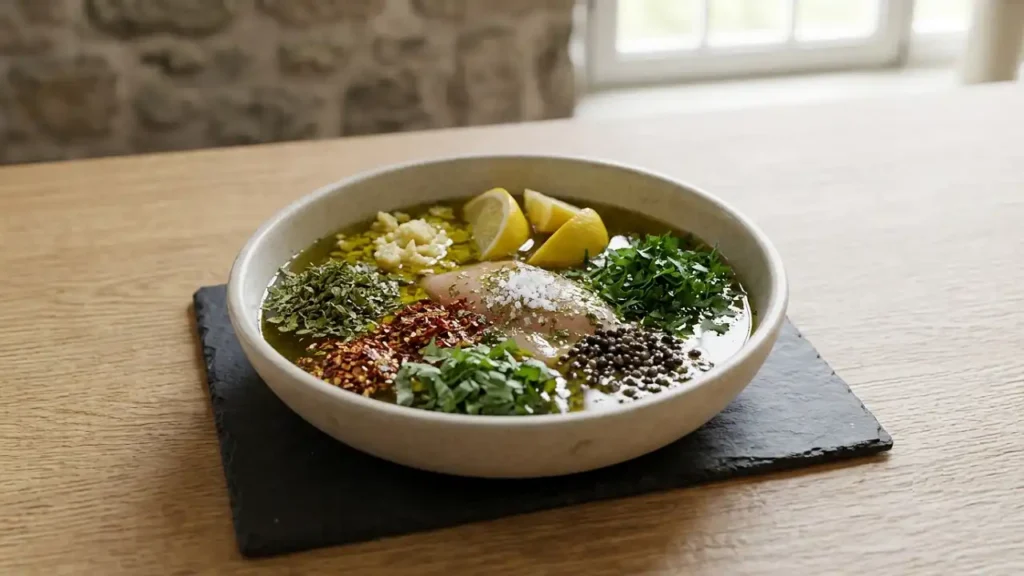
Step 5 — Coat the chicken fully.
Place chicken thighs or breasts in a zip-lock bag or shallow dish.
Pour the italian marinade for chicken over and press the meat to coat every surface.
Step 6 — Rest in the refrigerator.
Marinate for a minimum of 2 hours and no longer than 12 hours for best texture.
Step 7 — Cook on high heat.
Grill, pan-sear, or roast at 425°F.
High heat caramelizes the herbs and locks in moisture.
Step 8 — Rest before slicing.
Let the cooked chicken sit for 5 minutes before cutting.
This step is non-negotiable for juicy results.
Egg White Bites : Master the Ultimate Farm-Fresh Recipe
What Does This Mean for Produce-Focused Cooking?
This is where the recipes category meets real agricultural intention.
When we use herbs grown without synthetic inputs, the flavor compounds are measurably more complex.
Our culinary team tasted side-by-side comparisons — garden-fresh oregano versus dried from a jar — and the difference was immediate.
A great italian marinade for chicken is ultimately an argument for buying better ingredients.
It rewards the farmer who grew the basil and the cook who chose not to cut corners.
The Final Word
This italian marinade for chicken is one of the simplest, most satisfying recipes we return to every season.
Make it once from scratch, and you will not look back.
The herbs, the acid, the oil — it all comes together in a way that bottled dressings simply cannot replicate.